Compliance
Regulation D compliance software for 506(b) and 506(c) offerings
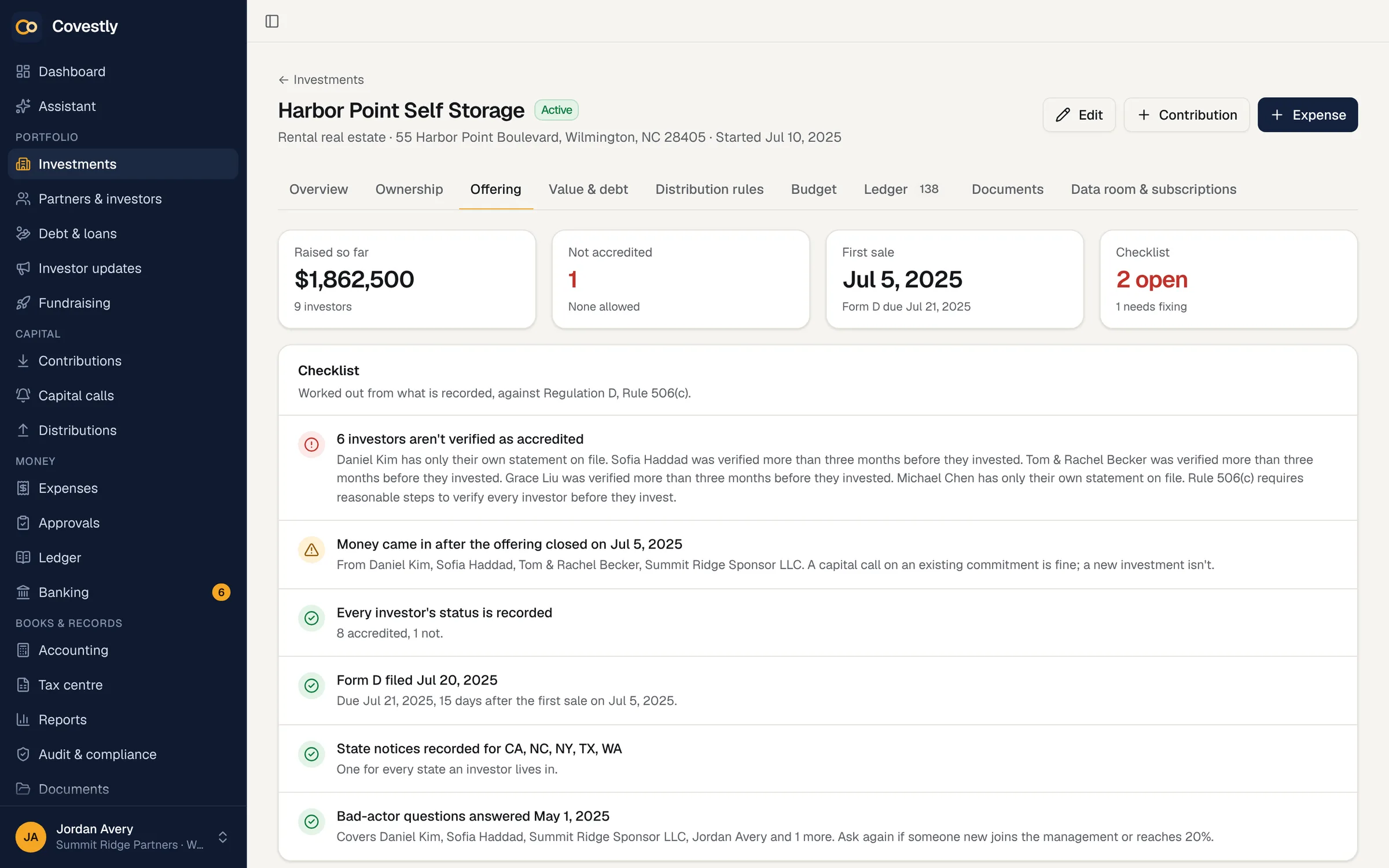
Each investment records how the deal is structured and which exemption it relies on. A checklist compares your own records with what that exemption asks for, and tells you what’s missing.
- 14-day free trial with every add-on
- Investors are always free
- Unlimited staff
- Cancel any time
Without it
Compliance shouldn’t live in someone’s memory
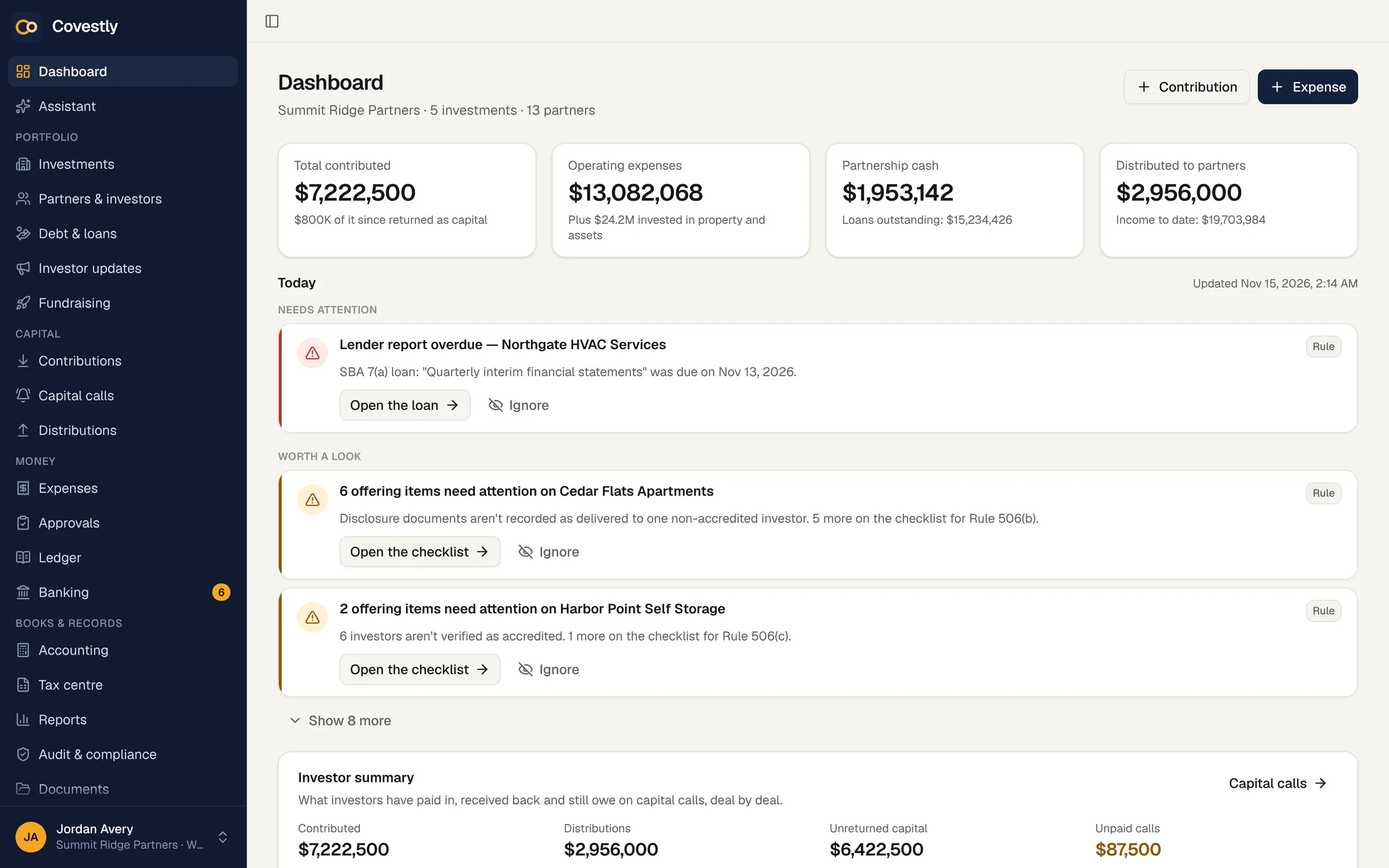
Whether a deal relies on 506(b) or 506(c), the details add up: who is accredited and how you know, how many non-accredited investors came in, when the first sale happened and which states need a notice. Kept in folders and calendars, something gets missed.
- Accreditation evidence scattered across e-mails
- No running count of non-accredited investors
- Form D and state notice dates on a calendar
- Bad-actor questions asked late or not at all
The structure sets the rules
Choose how the deal is put together (preferred return and promote, preferred equity, a pooled fund, notes or SAFEs, revenue share, co-ownership and more) and Covestly sets the usual exemption and distribution rules for you to adjust to your agreement.
- Common deal structures to start from
- The usual exemption filled in
- Distribution rules that match the structure
- Everything adjustable to your documents
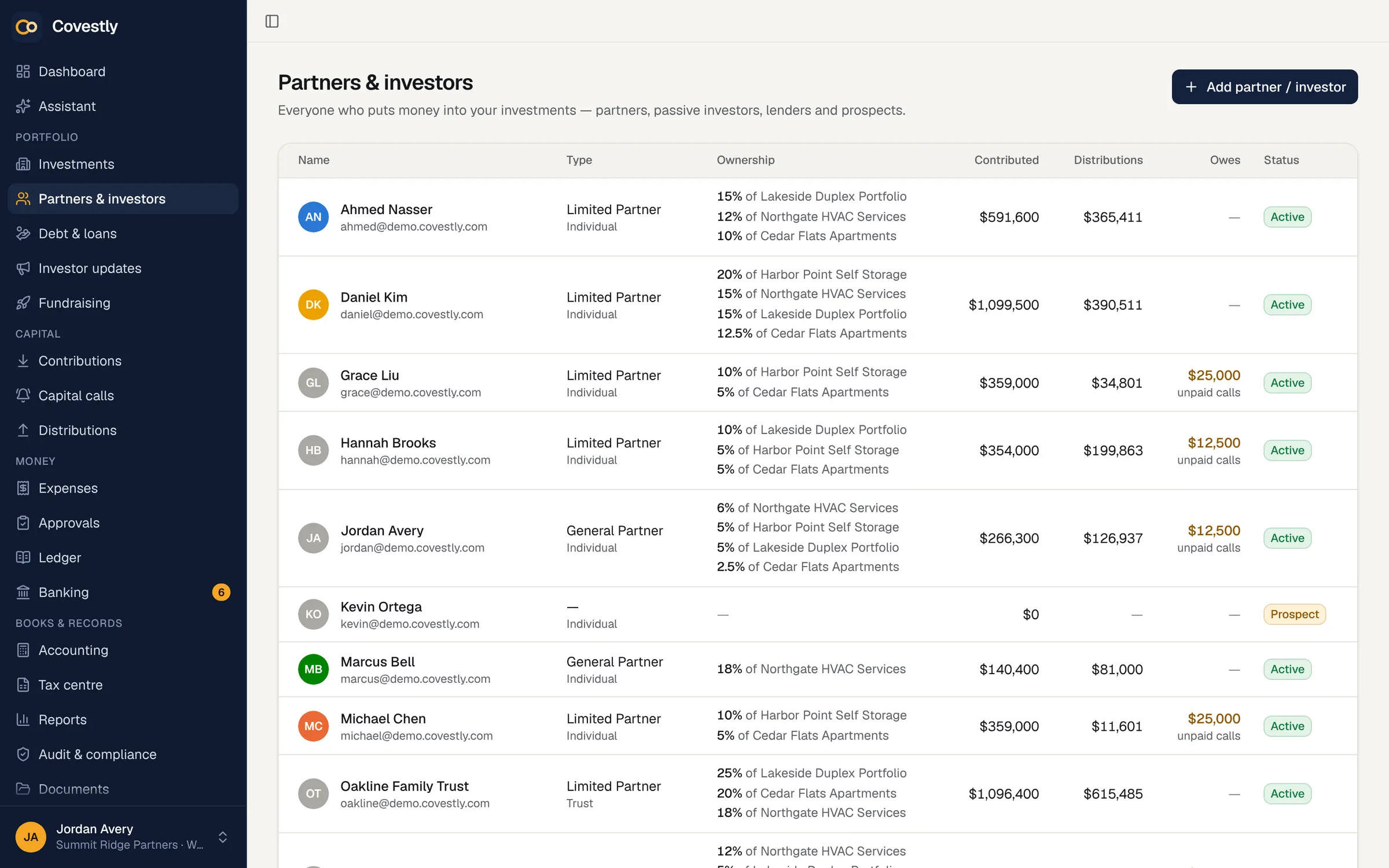
Investor qualification on every record
Each investor’s record keeps whether they’re accredited, which test they meet, how you know and when, how you knew them before the offering, and their state. Only categories are stored, never income or net-worth figures, and investors can complete the questionnaire themselves in the portal.
- Accreditation status and the test met
- How and when it was established
- Prior relationship and state of residence
- A questionnaire investors fill in themselves
506(c) verification, checked investor by investor
For a 506(c) offering, each investor’s record is checked against the accepted ways to verify: documents you reviewed, a letter from a CPA, attorney, broker-dealer or investment adviser dated within three months, an earlier verification within five years, or a large minimum investment with the investor’s written statement.
- Verification method recorded per investor
- Third-party letters and their dates
- Large minimum investments under the March 2025 SEC staff position
- Self-certification flagged where it isn’t enough
Dates and notices that don’t slip
Form D is due 15 days after the first sale: the checklist shows the date, the daily briefing warns as it approaches, and an open offering is reminded of its yearly amendment. A state notice is tracked for each state an investor lives in, and bad-actor questions are listed for everyone who runs the deal or holds 20% or more.
- Form D date and yearly amendment
- State notices by investor residence
- Bad-actor questions before the first sale
- Open items shown on the dashboard
How it works
Deal structure & Reg D checklist, step by step
Choose the structure and exemption
Record how the deal is set up and whether it relies on 506(b), 506(c), 504 or isn’t an offering.
Record each investor’s status
Accreditation, how it was established and their state, or let them answer the questionnaire in the portal.
Work the checklist
See what the exemption asks for that your records don’t show yet.
Keep it current
The daily briefing warns about Form D and other dates as they approach.
Keep exploring
Works hand in hand with
Deal structure & Reg D checklist: questions and answers
Does Covestly file Form D for me?
No. Covestly shows when Form D is due, warns as the date approaches and reminds you of the yearly amendment, but the filing is made on the SEC’s EDGAR system by you or your lawyer.
When is Form D due?
Within 15 calendar days after the first sale, which is generally the date the first investor is irrevocably committed to invest, and as an amendment at least once a year while the offering stays open. The checklist shows the date and the daily briefing warns as it approaches.
Is this legal advice?
No. Covestly keeps records and compares them with short summaries of each rule. The rules have conditions that aren’t modelled and states add their own, so have a securities lawyer confirm the exemption before you take anyone’s money.
Which exemptions does the checklist cover?
Rule 506(b), Rule 506(c) and Rule 504, plus deals that aren’t an offering because every partner takes part in decisions. In those, a partner recorded as passive is pointed out.
Does Covestly store investors’ income or net worth?
No. It stores categories only: whether an investor is accredited, which test they meet, how that was established and when. Supporting documents you upload stay internal unless you choose to share them.
How is the 35 non-accredited investor limit tracked?
For 506(b), the checklist counts non-accredited investors against the limit of 35 in any 90 days, and flags anyone not recorded as sophisticated, a missing prior relationship, and disclosure documents delivered late or not at all.
See your deals the way your investors will
Set up your first deal in minutes. Every add-on is included while you try it.
- 14-day free trial with every add-on
- Investors are always free
- Unlimited staff
- Cancel any time